Introduction:
In 1939, World War 2 officially began. Though the ideas of Benito Mussolini had gone through various changes in the years leading up to it, the dictator had decided to choose the option of terror, joining forces with Hitler’s Germany and ensuing horrific chaos onto the world. During and after the war, undeniable changes occurred not only outside of Italy but within it as well. These changes within Italy did not seem to be talked about to a large extent outside of the country, but through the new film genre “Neo-realism” that emerged from the literature style Verismo, the world was able to see the extent as to which the Italian people suffered. Neo-realism had already formed during the war itself with films like Ossessione directed by Luchino Visconti, but it wasn’t until those many years after the war where Italians were trying to to make sense of their new world, when the mind of Pier Paolo Pasolini wanted to try a new outlet to explore his intellectual ideas about Italian society, politics, and the poor. He did just that with his first film “Accattone” in 1961, but it was only a year later when he returned with “Mamma Roma”, a rugged yet defined film which gave the insider perspective on the lives of Italians during the years after the war. Through this film, people around the world were further able to see Italy’s struggles; a life outside of “la dolce vita”, where we see the people of Rome just as you would if you were dropped into the eternal city during that time. It was a new Italy, with homes and cities converted to rubble, and the economy degraded, the Italian people were left to fend for themselves like the gladiators many centuries ago. Although this time it was not the emperor in which they bowed down to, but the cruelness of a society that had been left astray like an unwanted dog, struggling to find its way back to safety. Who better to paint this picture for us than one of Italy’s greatest minds, Pier Paolo Pasolini.
What is Mamma Roma?
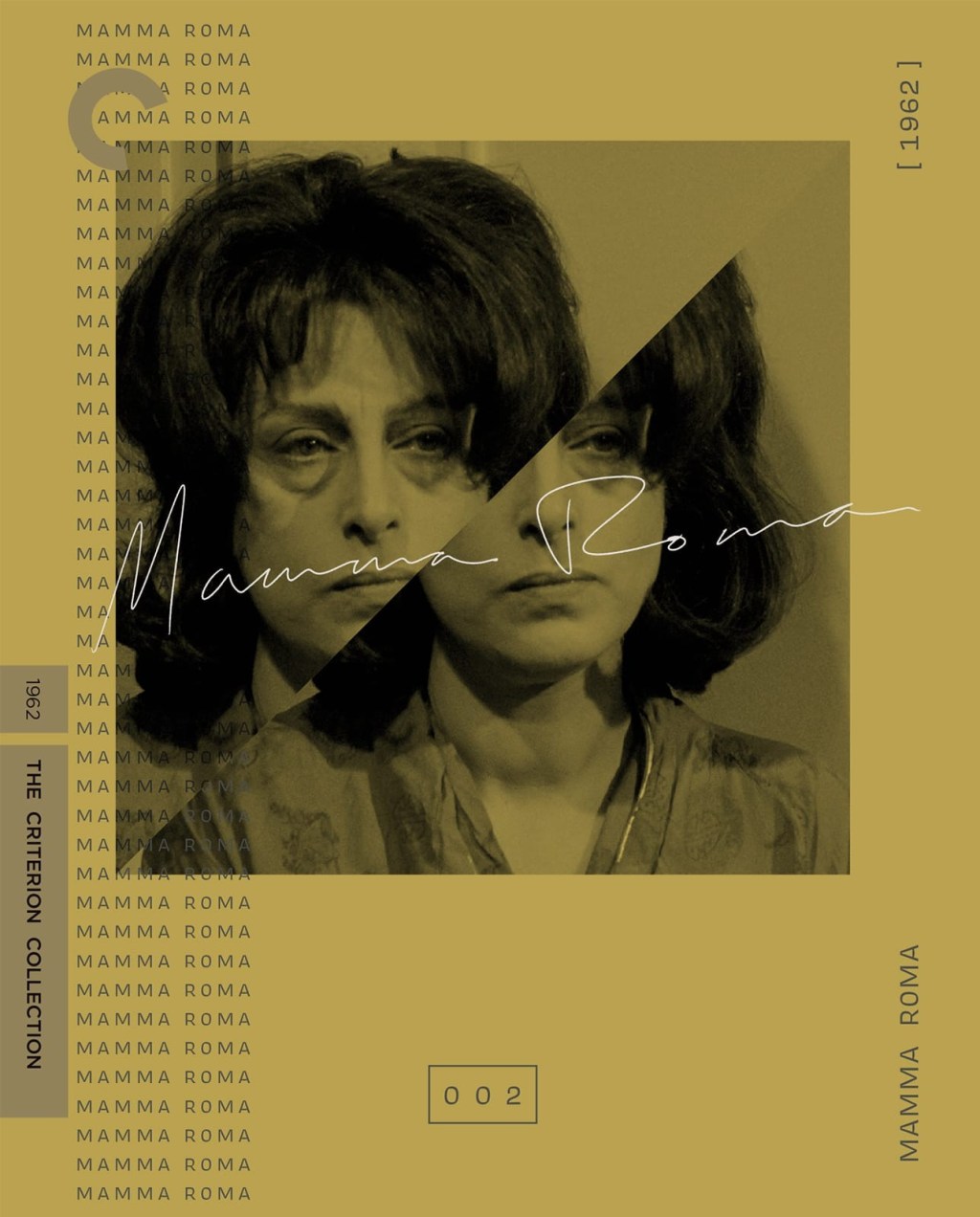
“Mamma Roma”, Pasolini’s second ever movie, is the story of a woman by the name of Mamma Roma who worked many years as a prostitute on the outskirts of Rome, a person who was of the subproletariat or lumpenproletariat class and is finally freed from working for her pimp Carmine. She then reunites with her son Ettore and works her way to the lower working class, selling food at the market. Mamma Roma’s goal is to create a more fulfilled life for her son and land him a solid place within society. This proves to be harder than expected as her pimp returns, forcing her to go back to the life she was hiding from her son, while at the same time Ettore remains ambitionless, preferring to hang around the young thieves he considers his friends. While Mamma Roma would do anything for her only child, he holds a resentment towards her, continuing to get into trouble until he lands himself in jail, where he eventually dies.
Uniqueness
This film is more than a one off mother and son story. “Mamma Roma” truly dives into what it was like for Italians; more specifically Romans, during the years after war. “Mamma Roma” may have been fiction, but the reality is that stories like Ettore’s and his mother’s were all too common as lower class Italians lived in the rubbles of Rome. What makes Pasolini’s neorealism films stick out was his ability to speak about the unspoken, to be unafraid of the controversy, and to give honest accounts of a harmed society. A large portion of the actors in “Mamma Roma” were not professional, most being people that were found on the street and hand chosen by Pasolini due to their physical features. It was the message that was important, conveying the reality that Italy and Rome were not okay. The visuals were equally important to him as well, as people could hear conversations about Rome, watch interviews, but one can never understand until you see it. Through Ben Lawton’s article Italian neorealism: A Mirror Construction of Reality, We see him quote Italo Calvino as he states, “The importance of neorealism, he suggests, is not to be found in its subject matter, which changes constantly from writer to writer, nor in the ideology which also changes, but in the revolutionary rejection of the major trend in the history of Italian literature, the urge to write elegantly, according to the somewhat artificial canons of the official Italian grammars.” This is something that Pasolini does perfectly in “Mamma Roma”. Pasolini’s use of dialect has been highlighted throughout his career and the use of Roman dialect is prominent throughout this film. Many of the characters, if not almost all, speak in dialect and it can be assumed that many of the actors themselves did not know standard italian. This highlights the authentic Italy, as Pasolini has mentioned that standard italian is really only used as an international means of communication for the Italian people. It is through these unique dialects in which you truly see the culture of the cities, towns, or regions you are in. Having the roman dialect be so prominent within the film can be seen as a nod to the roman people, giving them a sense of connection to the film, making it more heartfelt. Furthermore, this can be related back to the much needed separation of fascism in film. Mussolini had a strong dislike of dialects and tried to prohibit them, believing that Italy would be more unified under a single language, trying to take away regional identities to become one, whereas Pasolini chose to bring it to the forefront and embrace it. This truly defines neorealism at its core as seen in the article Neorealism In Italian Cinema: 1942-55,“From that perspective, neorealism isn’t only an aesthetic but also a political and ideological movement. It strived for reorientation of cinema expression of everyday reality and focusing on the class/people who have never before received the attention of cinema.” Pasolini was able to give a voice to the voiceless, and show their world in a creatively expressive way.
Visuals and Message
The visual appearance of the film through the people and the scenery is a very important part to “Mamma Roma”, as it captures the essence of Rome. Tonino Delli Colli, a cinematographer who worked closely with Pasolini on many films including “Mamma Roma” stated in an interview that many of the children chosen throughout this movie could barely even say their lines. While many would have chosen other children, Pasolini’s fascination with physical features, whether it a depiction of the face through the artwork of Michelangelo, mannerist paintings, or someone he saw on the street, did not deter him from getting the scenes he desired. To fulfill the need for dialog they would ask the child actors to count from 50 – 100, and simply dub it over with another child’s voice in post production. This is a prime example of how Pasolini brought a different viewpoint to how neorealist films could be made, as well as how important it was to capture images. Enzo Siciliano, a famous Italian playwright and writer also mentions in an interview that Pasolini’s sources were visual instead of literary. In the article Re-envisioning the Nation:Film Neorealism and the Postwar Italian Condition, it is said that “Specifically the stylistic commonalities found in the propensity of location shooting, natural lighting, the use of non-actors, and voyeuristic long shots, has largely obfuscated equally important and socially driven content and commentary”. This goes hand in hand with “Mamma Roma”, as Pasolini shoots his film in specific places such as the ruins in the south east part of outer Rome and in various low income neighborhoods. Regardless of the storyline itself, one can get an understanding and feeling of the situation in Rome through the background. As the streets are littered, dirty and filled with people trying to make a living, the children play in the outskirts in the weeds and the ruins, almost as if the unkept landscape and the crumbled architecture represents the children themselves. “Pasolini’s Rome is a variation on the theme of the sublime and the ugly and comes closer to what someone called the sublimely ugly: The Roman landscapes in his poems are littered with “aphrodisiac dirt,” and the city is an “acid, burning dump” with “soaking holes and dry heaps of filth.” This is a depiction in which the article Pasolini: Deconstructing the Roman Palimpsest interprets how Pasolini looked at Rome. While this quote talks about his poems, it can also relate to the film as Rome is almost looked at in a dystopian way, not portrayed with elegance as seen in other films like “8 ½” or “La Dolce Vita”. Anna Magnani and Mamma Roma herself are also personifications of Rome in many ways. Magnani was a perfect choice for the lead, as she was born in Rome and had been known to be a tough, hardworking and loving person. The character of Mamma Roma was written to perfection, and her story related to the city itself. She had been beaten down but was willing to rise again, and everywhere she went she was loved by all, symbolizing the undying connection between Rome and its people.
Worldwide Impact
The use of people found on the street, the setting, and the story of “Mamma Roma”, were used to further return naturalism to the forefront of cinema. At a time when the Italians did not want to ignore their reality, cover up their struggle with comedies or go-getting American films, they chose to pull inspiration from naturalism and really speak to the citizens, no matter how uncomfortable it may be. This is what the Italian people wanted. Seeing their struggles portrayed on the big screen allowed them to relate and feel united with each other and helped give them a way to vent and express their feelings. It also proved to be an escape from the fascist film propaganda that had filled up Italian televisions during the war. Not only did the Italian people get to be freed from cinematic propaganda, but this breakthrough back into reality allowed people outside of Italy to get a glimpse of their lives. Re-envisioning the Nation: Film Neorealism and the Postwar Italian Condition mentions that “In his examination of the relationship between cinema and socio-cultural transformation in Italy, P. Adams Sitney identifies two specific periods in which film has most actively participated in the (re)construction and communication of the changing nation: the immediate postwar period of the late 1940s, and the early 1960s, years marked by the apex of Italy’s “economic miracle””. This relates to the extent that neorealism helped unite and heal the country as they worked hard to bring back the life they once knew.
Criticisms and Approach
Although Italians were in love with the products that had come out of neorealism, Pasolini was known to explore different ways of thinking. Through the religiously comparative scenes such as Ettore’s crucifixion or scenes that could be seen as too sexual for cinema, Pasolini’s films were met with many mixed opinions and like usual, Italy was one of the last places that accepted their own. “Mamma Roma” was no exception, as its box office earned very little and received mixed reviews by critics while in America, it got more praise as they learned more about what the political-economic state of Italy was like during that time. It was through Pasolini’s unique outlook that his films would stand out and would eventually be looked at as classics. As previously mentioned, Pasolini did not start out as a filmmaker, and due to this he was able to look at film in various ways. One way he viewed the creation of “Mamma Roma” was through the eyes of a poet as the article called Pasolini Interprete del Proprio Cinema mentions, “Pasolini fa poesia in forma di cinema. Fa poesia attraverso il linguaggio e le tecniche di un nuovo e diverso sistema di segni, costruendo un linguaggio iconografico che presenta numerose analogie con il precedente linguaggio poetico”. His unique outlook as someone from “outside” the world of cinema allowed him to tackle filmmaking in a unique way, creating pieces that can be spoken about for years to come.
Conclusion
It is through hard times when one can test just how much they truly love something. It is through the years after war and the creation of “Mamma Roma” where Pasolini shares his love for his second home of Rome. The film is a complicated and messy love story with the city, which within itself is a testament to how much he cares. With the use of poetry, dialect, unique visual prowess, and a strong use of neorealist style, Pasolini shows us that as he is willing to embrace the pain of the past and the future; explaining that to be Roman is to love and to suffer, and that it is important to survive and hope for a better future, even when you aren’t sure if one is coming.
Bibliography
Jewell, Keala Jane. “Pasolini: Deconstructing the Roman Palimpsest.” SubStance, vol. 16, no. 2, 1987, pp. 55–66. JSTOR, https://doi.org/10.2307/3685162. Accessed 15 Dec. 2024.
Santato, Guido. “PASOLINI INTERPRETE DEL PROPRIO CINEMA.” Studi Novecenteschi, vol. 30, no. 65, 2003, pp. 175–87. JSTOR, http://www.jstor.org/stable/43449948. Accessed 15 Dec. 2024.
Sharma, Manoj. “NEOREALISM IN ITALIAN CINEMA: 1942-55.” Proceedings of the Indian History Congress, vol. 69, 2008, pp. 952–64. JSTOR, http://www.jstor.org/stable/44147257. Accessed 15 Dec. 2024.
Lawton, Ben. “Italian Neorealism: A Mirror Construction of Reality.” Film Criticism, vol. 3, no. 2, 1979, pp. 8–23. JSTOR, http://www.jstor.org/stable/44018624. Accessed 15 Dec. 2024.
Piepergerdes, Brent J. “Re-envisioning the Nation: Film Neorealism and the Postwar Italian Condition.” ACME Editorial Collective, 2007.
 GenerationsItalia
Leave a comment